Sustained high blood glucose damages the body mainly by injuring blood vessels. Glucose attaches to proteins in vessel walls (glycation), generates oxidative stress, and causes inflammation. In small vessels this leads to eye disease, kidney disease and nerve damage; in large vessels it accelerates the plaque that causes heart attack and stroke. The degree of damage tracks how high glucose has been and for how long, which is why bringing it down — even years after diagnosis — reduces complications.
The common mechanism: damaged blood vessels
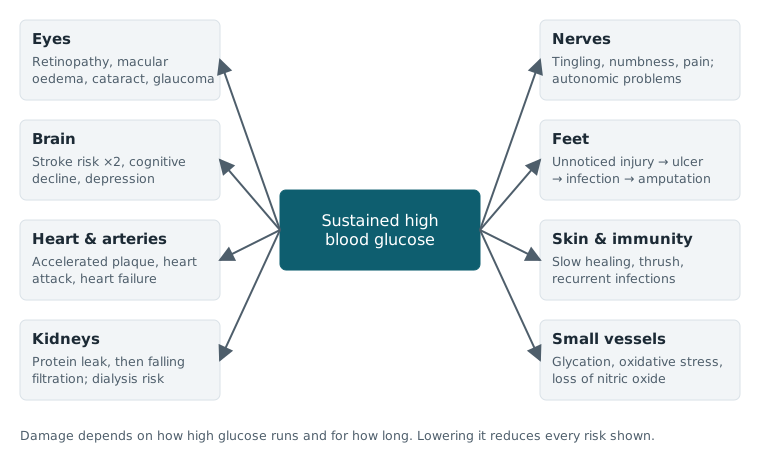
Almost every long-term effect of high blood glucose comes back to the blood vessels — and in particular to their lining, the endothelium.
Three processes do the damage:
Glycation. Glucose attaches spontaneously to proteins. Over time the attachments rearrange into stable compounds called advanced glycation end-products (AGEs), which stiffen collagen in vessel walls, trap other molecules, and trigger inflammatory signalling. The A1C test measures exactly this process in haemoglobin; the same thing is happening throughout the body.
Oxidative stress. Cells that take up glucose without needing insulin — vessel lining, nerve cells, kidney cells, the retina — are flooded with it when levels are high. Processing the excess generates reactive oxygen molecules that damage cell membranes, proteins and DNA.
Inflammation and reduced nitric oxide. The endothelium normally produces nitric oxide, which keeps vessels relaxed and slippery. High glucose reduces it, leaving vessels stiffer, more prone to clotting and more attractive to the immune cells that seed atherosclerotic plaque.
Two categories of complication follow. Microvascular damage affects the tiny vessels of the eye, kidney and nerves. Macrovascular damage affects the large arteries of the heart, brain and legs. Glucose control has its clearest effect on the first; the second depends heavily on blood pressure, cholesterol and smoking as well.
The heart and large arteries
High glucose accelerates atherosclerosis, the accumulation of fatty plaque in artery walls. It also makes plaque more likely to rupture and blood more likely to clot on it. People with diabetes have roughly twice the risk of heart attack and stroke, and cardiovascular disease is their leading cause of death.
Diabetes also affects the heart muscle directly — a condition called diabetic cardiomyopathy — increasing the risk of heart failure even without blocked arteries. In the legs, narrowed arteries cause peripheral artery disease: pain on walking, poor wound healing and, combined with nerve damage, the risk of foot ulcers.
Because these outcomes are driven by more than glucose, cardiovascular protection in diabetes leans as heavily on blood pressure treatment, statins and smoking cessation as on glucose targets. Some newer glucose-lowering drugs (SGLT2 inhibitors and GLP-1 receptor agonists) reduce cardiovascular events beyond what glucose lowering alone would predict.
The kidneys
Each kidney contains about a million filtering units, each a tuft of tiny vessels. High glucose thickens the filter membranes, scars the supporting tissue, and — early on — increases the pressure at which the kidneys filter. The first detectable sign is protein (albumin) leaking into urine; later, filtering capacity (measured as eGFR) falls.
Diabetic kidney disease develops in about a third of people with diabetes and is the leading cause of kidney failure needing dialysis. It is silent until advanced. It is monitored with a yearly urine albumin-to-creatinine ratio and eGFR, and its progression is slowed by glucose and blood pressure control, ACE inhibitors or ARBs, and SGLT2 inhibitors.
The eyes
The retina has the most metabolically active tissue in the body and a dense network of small vessels. High glucose weakens their walls, causing tiny bulges (microaneurysms), leaks and bleeds. The retina responds to reduced oxygen by growing new, fragile vessels that bleed easily and can pull the retina away from the back of the eye. This is diabetic retinopathy, the leading cause of new blindness in working-age adults.
Fluid leaking into the central retina (macular oedema) blurs central vision. High glucose also accelerates cataract formation and raises the risk of glaucoma. Retinopathy is symptomless until it is advanced, so a dilated eye examination is recommended at diagnosis and then every one to two years; laser treatment and injections can preserve sight when it is caught early.
The nerves
About half of people with diabetes develop some form of nerve damage. The longest nerves suffer first, which is why symptoms start in the toes and feet: tingling, burning, numbness or loss of sensation, typically in a "stocking" pattern, later spreading to the hands. The loss of protective sensation means injuries go unnoticed (the symptoms of high blood sugar include the early tingling), and combined with poor circulation this is the path to foot ulcers and amputation.
Nerves that control internal functions are also affected: digestion (slow stomach emptying, constipation or diarrhoea), bladder emptying, blood pressure on standing (dizziness), heart rate, sweating, and sexual function — erectile dysfunction affects a majority of men with long-standing diabetes. The guide on blood sugar and nerve health covers this in more detail.
The feet
The feet combine three problems: nerve damage removes pain as a warning, reduced blood flow slows healing, and high glucose impairs immune defences. A blister or small cut can become an ulcer, the ulcer can become infected to the bone, and severe infection can require amputation. Daily foot checks, well-fitting shoes, and prompt attention to any wound prevent most of this.
The skin
High glucose dries the skin, impairs wound healing and encourages bacterial and fungal infections, particularly in skin folds and between the toes. Several skin conditions are characteristic of diabetes, including thickened, waxy skin on the hands and shins, and patches of thinned, brown skin on the lower legs.
The immune system
White blood cells function less effectively when glucose is high: they move more slowly, engulf bacteria less efficiently, and kill them less reliably. Infections — urinary, skin, respiratory, dental — are more frequent and more severe, and infections in turn raise glucose further.
The brain
Diabetes roughly doubles the risk of stroke and is associated with a higher risk of cognitive decline and dementia, through vascular damage, insulin resistance within the brain itself, and repeated episodes of very high or very low glucose. Depression is also more common, and each worsens control of the other.
The teeth and gums
Periodontal (gum) disease is more common and more severe in diabetes, because of impaired immunity and glycation of gum tissue. The relationship runs both ways: treating gum disease modestly improves glucose control.
Why control reduces damage
The UK Prospective Diabetes Study followed people with newly diagnosed type 2 diabetes for a decade. Those assigned to tighter glucose control had about a quarter fewer microvascular complications, and the difference persisted for years after the study ended, even though glucose levels converged. Every 1-point reduction in A1C was associated with a roughly 37% reduction in microvascular complications and a 14% reduction in heart attacks.
Changes can begin before diabetes is diagnosed, in the prediabetes range. The lesson is that the damage described here is dose-dependent and time-dependent. Lower glucose, sustained over years, means less of it — and the earlier control begins, the more that is preserved.
Frequently asked questions
How long does it take for high blood sugar to cause damage?
Small-vessel complications typically take years of sustained elevation to become detectable, though changes begin earlier. Damage is not linear — it accelerates the longer and higher glucose runs. Some studies find early nerve and retinal changes already present at the time of a type 2 diabetes diagnosis, reflecting the years of undiagnosed high glucose that usually precede it.
Does damage from high blood sugar go away when glucose comes down?
Partly. Improving glucose control slows or halts the progression of most complications and can reverse early changes in the retina and kidneys. Established nerve damage and scarred kidney tissue do not regenerate, which is why early control matters most. There is also a "legacy effect" — years of good control continue to protect long after.
Which organ is affected first?
There is no fixed order, but nerves in the feet and the small vessels of the retina are often affected earliest, and both are usually silent at first. That is why annual foot and eye examinations are part of diabetes care.
References
- NIDDK. Preventing Diabetes Problems (2023). https://www.niddk.nih.gov/health-information/diabetes/overview/preventing-problems
- NIDDK. Diabetic Neuropathy (2023). https://www.niddk.nih.gov/health-information/diabetes/overview/preventing-problems/nerve-damage-diabetic-neuropathies
- The Lancet. Intensive blood-glucose control with sulphonylureas or insulin compared with conventional treatment and risk of complications in patients with type 2 diabetes (UKPDS 33) (1998). PubMed PMID 9742976. https://pubmed.ncbi.nlm.nih.gov/9742976/
This page contains no product recommendations or affiliate links. It is general health information, not personal medical advice. Read our editorial policy and medical review policy.