NeuroQuiet is a sublingual spray sold for tinnitus and "mental clarity": Alpha-GPC, GABA, L-Dopa bean (Mucuna pruriens), L-tyrosine, L-arginine and shilajit, at $69/$59/$49 per bottle with a consistent 90-day guarantee — and no milligram amounts anywhere. None of it has hearing evidence; the formula is a standard dopamine-and-calm nootropic stack re-aimed at ears. The line that matters most: Mucuna is a real L-dopa source — pharmacologically meaningful, interacting with antidepressants, MAOIs and Parkinson's medication — delivered sublingually at an undisclosed dose. Evidence rating: 1.5/5. Product Fit Score: 3.0/5. Tinnitus's real path — audiology, sound therapy, habituation — remains unsprayed.
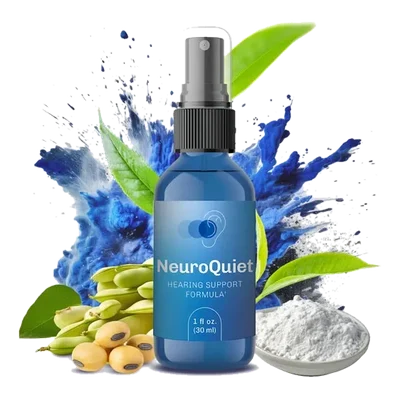
NeuroQuiet
- Form
- spray
- Price
- $69 (1 bottle) · $59/bottle (3) · $49/bottle (6)
- Guarantee
- 90-day money-back (stated by seller)
- Sold via
- buygoods_or_direct
- Label amounts
- Label web-sourced; consistent 6-ingredient nootropic roster across listings, sublingual spray format with stated dosing schedule (2 sprays AM / 4 PM) but no milligram amounts; 90-day guarantee consistent (one page notes refund minus S&H)
✓ 90-day refund window stated by seller — long enough to run an honest self-trial
Check current price on the seller's site
Affiliate link. Prices and guarantee as shown on the seller's page on 3 September 2026; they may have changed. Not independently verified beyond that page.
Evidence & product fit
| Product Fit factor | Score (out of 5) | Why |
|---|---|---|
| Formula completeness | 2.0 | A consistent six-ingredient roster and an unusually specific dosing schedule (2 sprays morning, 4 at night) — but zero milligram amounts, which matters doubly when one ingredient is a dopamine precursor. |
| Ease of use | 4.0 | The spray format is generally straightforward, but clear serving directions were not available in the product facts we verified. |
| Guarantee & buying terms | 4.0 | 90 days, consistently stated across the ecosystem (one page notes shipping deducted) — the strongest checkable feature. |
| Price / value | 1.5 | $69/$59/$49 for undosed amino acids and botanicals sold openly elsewhere at known strengths. |
| Category relevance | 3.5 | Parts of the named formula are aligned with hearing and tinnitus support positioning. Category relevance measures fit to the intended use; it does not mean the finished product has been clinically proven effective. |
Might suit you if…
- Difficult to construct honestly — even the supplement-curious nootropic buyer is better served by these exact compounds sold individually at stated doses
Skip it if…
- Anyone on antidepressants, MAOIs, or Parkinson's medication — undosed L-dopa is a genuine interaction, not a technicality
- Anyone with sudden or one-sided hearing symptoms — emergency-window territory, per the sudden-hearing-loss page
- Tinnitus sufferers spraying toward silence — habituation therapies own the evidence; the do-tinnitus-supplements page has the full scorecard
The Evidence Rating reflects research on the finished product and/or named ingredients for the intended use. The Product Fit Score is a separate practical assessment of formula completeness, ease of use, guarantee/buying terms, price/value and category relevance. Neither score is a customer rating, and affiliate relationships do not determine either score. See the full scoring method.
What NeuroQuiet is
NeuroQuiet is a sublingual spray — two sprays in the morning, four at night, held 20 seconds — sold against tinnitus and brain fog at $69/$59/$49 per bottle with a consistently stated 90-day guarantee. Its roster is stable across listings and familiar from our memory-supplement scorecard: Alpha-GPC, GABA, Mucuna (L-dopa bean), L-tyrosine, L-arginine, shilajit — a dopamine-support-plus-calm stack with no milligram amounts anywhere, re-labeled for ears.
Same costume, higher stakes
SonoVive established this category's signature move — a nootropic stack in a hearing costume — and NeuroQuiet repeats it with two differences. The format is more aggressive (sublingual absorption, twice-daily schedule), and the stack's centerpiece is more pharmacological: Mucuna is a genuine levodopa source, which is why the FAQ's interaction warning is this review's most useful paragraph. Meanwhile the hearing side of the ledger is unchanged: hair-cell loss doesn't respond to amino acids, tinnitus responds to habituation rather than herbs, and no component here has ever been trialled on either.
| The checkable ledger | |
|---|---|
| 90-day guarantee | Consistent — real |
| Roster stability | Good — same six everywhere |
| Doses | None, including for an L-dopa source |
| Hearing evidence | None |
| Interaction disclosure | Absent where it's most needed |
Verdict
2.3/5 — matching Audifort: strong guarantee, organ-agnostic formula, with NeuroQuiet's undosed Mucuna adding a genuine safety caveat its own label omits. The tinnitus page holds the interventions with data; a free hearing test outperforms any spray this category sells.
Frequently asked questions
Why does the Mucuna ingredient deserve its own warning?
Because Mucuna pruriens contains levodopa — the same molecule as the Parkinson's drug — making it one of the few funnel-supplement ingredients that is unambiguously pharmacological. Undosed L-dopa can interact with MAOIs, antidepressants and dopaminergic medication, and sublingual delivery is designed for faster absorption. A formula that won't state its Mucuna milligrams is asking users to dose a drug precursor blind.
Can a spray of amino acids reduce tinnitus?
No trial says so — of this product or any of its components. Tinnitus perception does respond to stress reduction, which is the kernel the "calming" narrative stretches; but the interventions with actual outcome data are hearing aids, sound enrichment and CBT-based habituation, covered on the tinnitus page. GABA taken orally (or sublingually) also crosses into the brain poorly — the mechanism story skips that inconvenience.
Is the guarantee dependable?
The 90-day window is the most consistent claim across NeuroQuiet's pages, with mechanics described (empty bottles accepted; one version deducts shipping). As with every funnel product we review: screenshot the exact terms at your checkout and keep the confirmation — that version is yours.
Why do tinnitus products target the brain rather than the ear?
Because a real research shift gives them vocabulary — modern tinnitus science does locate the persistent signal partly in central auditory circuits, not just the cochlea, which is why brain-directed therapies like CBT and sound retraining outperform ear-directed ones. Supplement marketing borrows that shift's language (neural pathways, auditory processing) without its treatments — no capsule ingredient has demonstrated central effects on tinnitus in controlled trials. The borrowed frame is a useful tell — when a product cites real neuroscience to sell undosed botanicals, the science is the costume, and the therapies the science actually produced (audiology, CBT) are the door it hopes you won't notice.
Is there any legitimate role for dopamine precursors in hearing?
Not in any trial literature — the mucuna/L-dopa angle this product leans on comes from mechanism speculation (dopamine participates in cochlear signal modulation) that has never produced a positive human tinnitus or hearing trial. Precursor logic also fails on its own terms: the body tightly regulates conversion, so swallowing precursors doesn't dial neurotransmitters up like a volume knob, and an undosed precursor of a genuinely psychoactive pathway is a strange thing to aim at older adults on medications. The mechanism-without-outcome pattern is this aisle's signature move — real biochemistry vocabulary, zero endpoints.
NeuroQuiet — from $69 · 90-day seller refund window
Check current price on the seller's site Compare hearing and tinnitus supplements
Affiliate links. Our evaluation is unaffected — the criterion scores above explain the verdict either way.
References
- National Institute on Deafness and Other Communication Disorders. Tinnitus (2023). https://www.nidcd.nih.gov/health/tinnitus
- U.S. Food and Drug Administration. Dietary Supplements (2024). https://www.fda.gov/food/dietary-supplements
- Federal Trade Commission. FTC Endorsement Guides (2023). https://www.ftc.gov/business-guidance/resources/ftcs-endorsement-guides-what-people-are-asking
Supplements have not been shown to restore lost hearing or cure tinnitus. Sudden hearing loss, one-sided hearing change, severe dizziness or neurologic symptoms need prompt medical evaluation; sudden sensorineural hearing loss can be time-sensitive. Review supplement ingredients for medication interactions before use.