Visivra is a once-daily eye capsule with a genuinely well-chosen six-ingredient roster — lutein, zeaxanthin, bilberry, astaxanthin, zinc, vitamin A — at $79/$69/$49 per bottle with a consistent 60-day guarantee, and no disclosed amounts for anything: no Supplement Facts panel is published, a gap even favorable reviews concede. That decides the grade, because this formula's evidence is entirely dose-shaped — lutein/zeaxanthin's real trials used 10/2 mg — and an unstated vitamin A load is the one ingredient here you can genuinely overdo by stacking. Evidence rating: 2.5/5. Product Fit Score: 3.2/5. Dosed lutein/zeaxanthin costs a third as much with every number printed, and diagnosed AMD still belongs to faithful AREDS2 formulas.
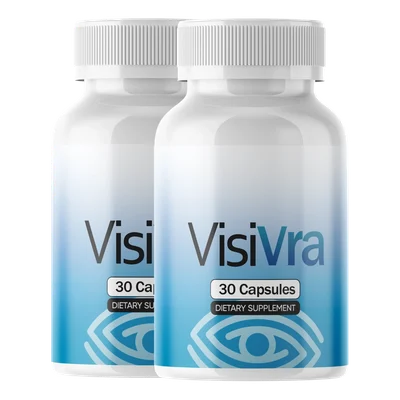
Visivra
- Form
- capsule
- Price
- $79 (1 bottle) · $69/bottle (3) · $49/bottle (6)
- Guarantee
- 60-day money-back (stated by seller)
- Sold via
- buygoods_or_direct
- Label amounts
- Label web-sourced; consistent compact 6-ingredient roster across the ecosystem but NO readable Supplement Facts panel or amounts anywhere — multiple reviewers concede dosages undisclosed; 60-day guarantee unusually consistent; pricing $79×2/$69×3/$49×6; marketing cites real lutein/zeaxanthin PMIDs whose doses it won't match to its own label
✓ 60-day refund window stated by seller — long enough to run an honest self-trial
Check current price on the seller's site
Affiliate link. Prices and guarantee as shown on the seller's page on 3 September 2026; they may have changed. Not independently verified beyond that page.
Evidence & product fit
| Product Fit factor | Score (out of 5) | Why |
|---|---|---|
| Formula completeness | 2.0 | A consistent, compact roster and unusually uniform marketing — but no readable Supplement Facts panel anywhere, a gap sympathetic reviewers concede, and an undisclosed vitamin A amount that makes stacking with other supplements a genuine unknown. |
| Ease of use | 4.5 | The capsule format is generally straightforward, but clear serving directions were not available in the product facts we verified. |
| Guarantee & buying terms | 3.5 | 60 days, stated near-identically across the entire ecosystem — the most consistent guarantee in our eyes set. |
| Price / value | 2.0 | $49–79/bottle when dosed lutein/zeaxanthin costs $10–20 a month with the numbers printed. |
| Category relevance | 4.2 | The named formula is broadly aligned with eye and vision support positioning. Category relevance measures fit to the intended use; it does not mean the finished product has been clinically proven effective. |
Might suit you if…
- The screen-heavy adult set on a carotenoid supplement who values a short roster and a dependable refund window — and who checks their multivitamin for vitamin A overlap first
Skip it if…
- Anyone with diagnosed macular degeneration — the proven product is a faithful AREDS2 formulation at printed doses, chosen with your ophthalmologist
- Anyone already taking a multivitamin or retinol product — unstated vitamin A on top of existing intake is the label's real hazard
- The value-minded — open-label lutein 10 mg / zeaxanthin 2 mg delivers the studied core for $10–20
The Evidence Rating reflects research on the finished product and/or named ingredients for the intended use. The Product Fit Score is a separate practical assessment of formula completeness, ease of use, guarantee/buying terms, price/value and category relevance. Neither score is a customer rating, and affiliate relationships do not determine either score. See the full scoring method.
What Visivra is
Visivra is a one-a-day eye capsule sold at $79×2 / $69×3 / $49×6 with the most consistent 60-day guarantee in our eyes set, built on six ingredients its whole ecosystem agrees on: lutein, zeaxanthin, bilberry, astaxanthin, zinc, vitamin A — and no amounts, anywhere: no readable Supplement Facts panel exists, a gap even its favorable reviewers concede while recommending it anyway.
Right design, missing arithmetic
Against our eyes category standard, Visivra's construction genuinely stands out: a short roster led by lutein and zeaxanthin — the two supplements in this entire aisle with real randomized-trial support (macular pigment density, glare recovery, early-AMD visual function at ~10/2 mg) — plus astaxanthin's small screen-fatigue file. Six ingredients fit honest doses in one capsule; VisiFlora's twenty-one can't. But the label prints nothing, while its marketing cites dose-dependent studies — and its undisclosed vitamin A creates the aisle's one real stacking hazard (FAQ). The do-eye-vitamins verdict applies verbatim: names borrow evidence; only doses inherit it.
| The ledger | |
|---|---|
| Roster design | Best in our eyes set — compact, evidence-led |
| Disclosed amounts | Zero |
| Cited studies | Real, dose-specific — doses unmatched to label |
| Vitamin A content | Unstated; stacking unknown |
| 60-day guarantee | Most consistent in the aisle |
Verdict
2.5/5 — the eyes aisle's current best, for design and a dependable guarantee, capped hard by the missing panel. The dominant alternatives are unchanged: open-label lutein 10 mg / zeaxanthin 2 mg for a third of the price with numbers printed; a faithful AREDS2 formula for diagnosed AMD; and the dilated exam that outranks every bottle on this shelf.
Frequently asked questions
Aren't the cited studies proof it works?
They're proof the ingredients were studied — at doses. Visivra's marketing cites real lutein/zeaxanthin trials (macular pigment, early-AMD visual function), which used specific amounts, typically 10 mg lutein and 2 mg zeaxanthin daily. Citing dose-dependent research while withholding your own doses is borrowing the conclusion without showing the arithmetic; a printed panel would settle it instantly, and none exists.
Why single out the vitamin A?
Because it's the one roster member with a meaningful ceiling. Preformed vitamin A accumulates; chronic excess harms liver and bone, and intake stacks silently across multivitamins, fortified foods and skin products. An eye formula that won't state its A content makes that arithmetic impossible — one of its own sales pages even warns buyers to check for overlapping vitamin A, advice the label itself defeats.
How does Visivra compare to VisiFlora?
Same aisle, opposite failure sizes. VisiFlora spreads 21 ingredients across four blends and disclosed one fractional dose; Visivra picks the right six and discloses zero. Visivra's design is closer to the evidence (compact roster, plausible capsule arithmetic, the studied carotenoid pair leading) — which is why it edges ahead — but neither survives the question "how much?", and that question is the whole category.
Right ingredients, no numbers — how would you rebuild this bottle correctly?
From the AREDS2 recipe itself, which is public: vitamin C 500 mg, vitamin E 400 IU, zinc 80 mg (with copper 2 mg), lutein 10 mg, zeaxanthin 2 mg. Several major manufacturers sell exactly this formula, branded to the study, for $15–25 a month with every dose printed — because the National Eye Institute published the protocol and compliance is checkable. That's the whole rebuild: same shopping intent, verified amounts, applicable only if your eye exam found the intermediate AMD the trial enrolled. A no-numbers version of famous numbers is the strangest product type in our queue — the answer key exists, publicly, and the label chose not to match it.
Visivra — from $79 · 60-day seller refund window
Check current price on the seller's site Compare eye health supplements
Affiliate links. Our evaluation is unaffected — the criterion scores above explain the verdict either way.
References
- National Eye Institute. Age-Related Macular Degeneration (AMD) (2024). https://www.nei.nih.gov/learn-about-eye-health/eye-conditions-and-diseases/age-related-macular-degeneration
- JAMA. Lutein + zeaxanthin and omega-3 fatty acids for age-related macular degeneration: the AREDS2 randomized clinical trial (2013). PubMed PMID 23644932. https://pubmed.ncbi.nlm.nih.gov/23644932/
- U.S. Food and Drug Administration. Dietary Supplements (2024). https://www.fda.gov/food/dietary-supplements
Eye supplements do not restore lost vision or treat most eye diseases. Evidence is condition-specific—for example, the AREDS2 formula applies to selected people with age-related macular degeneration, not general vision improvement. Sudden vision loss, flashes with a curtain-like shadow, severe eye pain or new neurologic symptoms require urgent care.