MindVault is a two-capsule daily nootropic ($69 single / $49×6, consistent 60-day guarantee) whose own pages can't agree on its size: five ingredients on some (bacopa, Alpha-GPC, phosphatidylserine, citicoline, B6), ten on others (adding lion's mane, ginkgo, Huperzine A, rhodiola, theanine, B12, zinc). The drift matters most for one member — Huperzine A, a real acetylcholinesterase inhibitor studied at controlled microgram doses — which this lottery may or may not deliver, at strengths no page states. The stable core is the aisle's honest choline-and-bacopa class, undosed. Evidence rating: 2.0/5. Product Fit Score: 3.0/5. A buyer who wants that class can have it counted: open-label citicoline 500 mg or bacopa 300 mg, one at a time, with a pharmacist's glance at the med list.
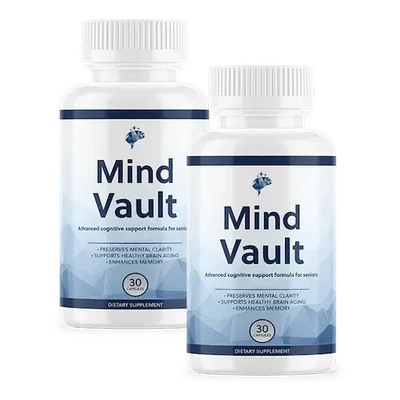
MindVault
- Form
- capsule
- Price
- $69 (1 bottle) · $49/bottle (6)
- Guarantee
- 60-day money-back (stated by seller)
- Sold via
- maxweb
- Label amounts
- Roster drifts 5-vs-10 ingredients by page — including whether Huperzine A (a real acetylcholinesterase inhibitor) is aboard at all; no doses on any version; 'clinically tested' badge with fake 4.9/50,000 stats; 60-day guarantee consistent; 2 capsules/day
✓ 60-day refund window stated by seller — long enough to run an honest self-trial
Check current price on the seller's site
Affiliate link. Prices and guarantee as shown on the seller's page on 3 September 2026; they may have changed. Not independently verified beyond that page.
Evidence & product fit
| Product Fit factor | Score (out of 5) | Why |
|---|---|---|
| Formula completeness | 1.5 | A 5-versus-10 roster drift across official-styled pages, no doses on any version, a "clinically tested" badge attached to no study, and 4.9-from-50,000 statistics hosted nowhere; the 60-day guarantee, consistently stated, is the one fixed fact. |
| Ease of use | 4.5 | The capsule format is generally straightforward, but clear serving directions were not available in the product facts we verified. |
| Guarantee & buying terms | 3.5 | 60 days, empty-bottle mechanics described, consistent across the swarm. |
| Price / value | 1.5 | $49–69 for a membership lottery. |
| Category relevance | 4.0 | The named formula is broadly aligned with brain and memory support positioning. Category relevance measures fit to the intended use; it does not mean the finished product has been clinically proven effective. |
Might suit you if…
- No one, as configured — the buyer drawn to the honest core has dosed single-ingredient versions; the buyer indifferent to whether a cholinesterase inhibitor is in the bottle shouldn't be
Skip it if…
- Anyone on heart-rhythm, cholinergic, or seizure medications — Huperzine A may or may not be aboard, at unknown micrograms, which is unscreenable in both directions
- Anyone on blood thinners — ginkgo swings in and out of the roster the same way
- Anyone reassured by "clinically tested" — no MindVault study exists; the badge decorates ingredient-level borrowing
The Evidence Rating reflects research on the finished product and/or named ingredients for the intended use. The Product Fit Score is a separate practical assessment of formula completeness, ease of use, guarantee/buying terms, price/value and category relevance. Neither score is a customer rating, and affiliate relationships do not determine either score. See the full scoring method.
What MindVault is
MindVault is a two-capsule daily nootropic at $69/$49×6 with a consistent 60-day guarantee and an inconsistent self: five ingredients on some official-styled pages (bacopa, Alpha-GPC, phosphatidylserine, citicoline, B6), ten on others (adding lion's mane, ginkgo, Huperzine A, rhodiola, theanine, B12, zinc) — no doses on any version, beneath a "clinically tested" badge and 50,000 unfindable customers.
A lottery with a drug inside (maybe)
The brain aisle's roster-drift entry raises the stakes on a familiar failure: Vigortrix ran three rosters of botanicals; MindVault's swing members include a cholinesterase inhibitor — pharmacology that demands micrograms and med-list screening, delivered here as a maybe. The stable core is the aisle's best class, which our memory-supplements page prices honestly at dosed-single-ingredient rates; the checkup closes as always.
| The ledger | |
|---|---|
| Roster | 5 or 10, by page |
| Huperzine A aboard? | A coin flip |
| Doses | None, any version |
| "Clinically tested" | No MindVault study exists |
| Guarantee | 60 days, consistent |
Verdict
2.1/5 — the aisle's honest skeleton inside an unfixed body. The counted versions of its best members cost $10–20 each; the maybe-medicine costs whatever a coin flip is worth to you.
Frequently asked questions
Why is the Huperzine-A uncertainty the headline?
Because it's the difference between a botanical blend and unlabeled medicine. Huperzine A inhibits acetylcholinesterase — the mechanism of prescription dementia drugs — with real trials at tightly controlled 50–200 microgram doses and real cautions (bradycardia, cholinergic stacking, seizure history). Our Neuro Sharp review graded a product that at least consistently includes it; MindVault's pages make its presence a coin flip. You cannot screen, dose, or consent to a maybe.
Is the stable five-ingredient core worth anything?
It's the aisle's most defensible skeleton — bacopa's small 300 mg memory trials, the choline pair (Alpha-GPC, citicoline) with modest attention data, phosphatidylserine's hedged FDA claim — which is exactly why the honest purchase is those ingredients counted, one at a time, open-label for $10–20 each. A formula that won't fix its own membership can't deliver even its best members reliably.
How should a buyer read "clinically tested" badges?
As referring to ingredients someone else tested, never the bottle in hand — no MindVault trial exists, a pattern uniform across our 80-product queue: the studies live at the ingredient level, at doses the labels don't match, and the badge migrates to the product by adjacency. The one-line test that survives every funnel: ask for the study of this formula, at this dose, in people. In eighty reviews, the answer has been none, every time.
What would make a brain formula actually reviewable?
Three printed facts — a fixed roster (one list, every page), milligrams per ingredient (so bacopa can be checked against its 300 mg trials, citicoline against its 500), and honest claim language scaled to those trials ('small effects on some cognitive measures over 8–12 weeks'). Products meeting that bar exist in the wider nootropics market and cost less than this aisle's funnels. The pattern across our nine brain reviews is that none of the funnel products clears even the first requirement — which tells you the category's economics run on story rather than formulation, and prices the story accordingly — eleven ingredients for the sales page, five for the capsule, zero milligrams for the buyer, which is the whole trade in one line.
MindVault — from $69 · 60-day seller refund window
Check current price on the seller's site Compare cognitive support supplements
Affiliate links. Our evaluation is unaffected — the criterion scores above explain the verdict either way.
References
- National Institute on Aging. Memory Problems, Forgetfulness, and Aging (2023). https://www.nia.nih.gov/health/memory-loss-and-forgetfulness/memory-problems-forgetfulness-and-aging
- NCCIH. Ginkgo (2020). https://www.nccih.nih.gov/health/ginkgo
- Federal Trade Commission. FTC Endorsement Guides (2023). https://www.ftc.gov/business-guidance/resources/ftcs-endorsement-guides-what-people-are-asking
Memory or focus supplements do not treat dementia, Alzheimer’s disease or another cause of cognitive decline. New, worsening or function-limiting memory problems deserve medical assessment. Check formulas for stimulant, sedative, anticholinergic or blood-thinning interactions, especially if you take prescription medicines.