Neuro Sharp is a daily brain capsule ($79 two-bottle entry / $59×3 / $49×6, 180-day guarantee dominant) whose roster — ginkgo, phosphatidylserine, Huperzine-A, St. John's Wort, acetyl-L-carnitine, bacopa, with Alpha-GPC or lion's mane appearing on some pages — includes the two most drug-like inclusions in our brain queue, both undosed. St. John's Wort induces the liver enzymes that clear antidepressants (serotonin-syndrome risk when combined), hormonal contraceptives, warfarin, transplant and heart medications — the most consequential herb-drug interaction profile known. Huperzine-A is a real acetylcholinesterase inhibitor, the same mechanism as prescription dementia drugs, studied at careful microgram doses. Selling both at unknown strengths to memory-worried older adults — the most-medicated demographic — is the review. Evidence rating: 2.0/5. Product Fit Score: 3.1/5.
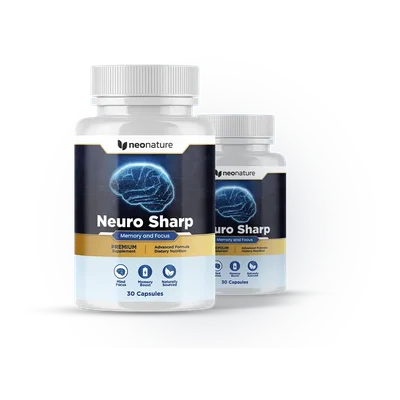
Neuro Sharp
- Form
- capsule
- Price
- $79 (1 bottle) · $59/bottle (3) · $49/bottle (6)
- Guarantee
- 180-day money-back (stated by seller)
- Sold via
- maxweb
- Label amounts
- Roster drifts 6-vs-8 by page; contains the queue's two most pharmacologically serious undosed inclusions — St. John's Wort (potent drug-interaction inducer: antidepressants, birth control, warfarin, transplant/cardiac meds) and Huperzine-A (an actual acetylcholinesterase inhibitor, same mechanism class as donepezil) — with no doses for either; 180-day guarantee dominant (90 in one review); 2-bottle $79 entry; fake 4.9/6,000 stat
✓ 180-day refund window stated by seller — long enough to run an honest self-trial
Check current price on the seller's site
Affiliate link. Prices and guarantee as shown on the seller's page on 3 September 2026; they may have changed. Not independently verified beyond that page.
Evidence & product fit
| Product Fit factor | Score (out of 5) | Why |
|---|---|---|
| Formula completeness | 1.5 | No doses anywhere — the one omission that matters most for exactly these two ingredients — plus a roster that drifts between six and eight members by page (Alpha-GPC and lion's mane swap in and out), a 180-vs-90-day guarantee split, and a 4.9-from-6,000 statistic hosted nowhere. |
| Ease of use | 4.5 | The capsule format is generally straightforward, but clear serving directions were not available in the product facts we verified. |
| Guarantee & buying terms | 4.0 | 180 days dominant and clearly stated — strong; one review circulates 90. |
| Price / value | 1.5 | $49–79 for unscreenable pharmacology. |
| Category relevance | 4.0 | The named formula is broadly aligned with brain and memory support positioning. Category relevance measures fit to the intended use; it does not mean the finished product has been clinically proven effective. |
Might suit you if…
- At most, the medication-free adult who has cleared it with a pharmacist anyway — and who'd still do better with single dosed bacopa or citicoline than a mystery-split of eight
Skip it if…
- Anyone on antidepressants — St. John's Wort plus SSRIs/SNRIs risks serotonin syndrome, and it reduces levels of dozens of other drugs; this is the interaction pharmacists are trained to catch first
- Anyone on hormonal contraception, blood thinners, transplant, seizure, HIV or heart medications — the SJW induction list, abbreviated
- Anyone on cholinergic or heart-rhythm medications, or with asthma/bradycardia — Huperzine-A's inhibitor pharmacology stacks and slows
The Evidence Rating reflects research on the finished product and/or named ingredients for the intended use. The Product Fit Score is a separate practical assessment of formula completeness, ease of use, guarantee/buying terms, price/value and category relevance. Neither score is a customer rating, and affiliate relationships do not determine either score. See the full scoring method.
What Neuro Sharp is
Neuro Sharp is a daily capsule at $79 (2-bottle entry) / $59×3 / $49×6 with a dominant 180-day guarantee and a roster drifting between six and eight members by page: ginkgo, phosphatidylserine, Huperzine-A, St. John's Wort, N-acetyl L-carnitine, bacopa (Alpha-GPC and lion's mane appear on some) — no doses for anything, including the two ingredients where doses are safety documents.
When the label is a pharmacology exam
The brain aisle's fourth review is its most safety-weighted: Vivalis taught us that undisclosed doses matter most for the one drug-like member; Neuro Sharp carries two — the herb with medicine's most consequential interaction file and a genuine cholinesterase inhibitor — aimed at the demographic averaging the most prescriptions. The honest half of the roster (bacopa's 300 mg trials, PS's hedged FDA claim) can't outweigh what the missing milligrams conceal. The reversible-cause checkup closes this review with more than its usual force: several items on that checklist are medication effects — the exact terrain this blend enters blind.
| The ledger | |
|---|---|
| St. John's Wort dose | Unstated — the reference interaction herb |
| Huperzine-A dose | Unstated — a real AChE inhibitor |
| Roster | Drifts 6-vs-8 by page |
| Interaction warnings on sales pages | None |
| Guarantee | 180 dominant; 90 in one review |
Verdict
2.3/5 — a strong guarantee wrapped around unlabeled pharmacology. The rule this product makes vivid: the more drug-like the ingredient, the more its milligrams are the label — and the pharmacist consult it never suggests is the cheapest safety equipment in the aisle.
Frequently asked questions
How serious is the St. John's Wort problem?
It's the reference case for herb-drug interactions — SJW induces CYP3A4 and P-glycoprotein strongly enough that regulators worldwide require warnings: documented contraceptive failures, transplant-organ rejections from lowered immunosuppressant levels, reduced warfarin and heart-drug effect, and serotonin syndrome with antidepressants. Every pharmacy interaction checker flags it. An unstated dose inside a "brain blend" means neither you nor your pharmacist can assess any of that — and the product's marketing never mentions the word interaction.
Isn't Huperzine-A evidence in this product's favor?
It's evidence the ingredient is a drug wearing a supplement label. Huperzine-A inhibits the enzyme that breaks down acetylcholine — donepezil's mechanism — and Chinese trials in dementia used tightly controlled 50–200 microgram doses with medical oversight, often cycled to avoid receptor adaptation. Real pharmacology demands real numbers: dose, timing, cautions (bradycardia, seizures, cholinergic stacking). A blend that won't print micrograms has taken a drug and removed its label.
What should the memory-worried buyer this targets actually do?
The sequence every review in this aisle ends with, because it's the one with evidence — a clinician visit that checks the reversible causes (B12, thyroid, medication side effects — ironically including anticholinergics this product's huperzine would fight, sleep apnea, depression), hearing and blood-pressure care, exercise as the strongest lever, and, for the supplement-curious, one dosed ingredient at a time with a pharmacist's eyes on the med list. Our memory-loss page carries the checklist.
How do you actually screen a supplement against your medication list?
Three tools, ascending in quality. Free interaction checkers (Drugs.com and similar) accept supplement ingredients by name and flag the documented pairs — St. John's Wort lights up dozens; useful triage, ingredient-level only. Better: a pharmacist, who will run your actual medication list against a product photo for free and knows the class-level risks checkers miss — for an undosed blend, show the full roster and expect (correctly) conservative advice. Best: the prescriber conversation for anything touching the flagged classes (anticoagulants, antidepressants, diabetes, heart-rhythm, transplant drugs). The screen only works on named ingredients at known doses — which is the practical reason undisclosed blends fail safety review before they fail evidence review.
Neuro Sharp — from $79 · 180-day seller refund window
Check current price on the seller's site Compare cognitive support supplements
Affiliate links. Our evaluation is unaffected — the criterion scores above explain the verdict either way.
References
- National Institute on Aging. Memory Problems, Forgetfulness, and Aging (2023). https://www.nia.nih.gov/health/memory-loss-and-forgetfulness/memory-problems-forgetfulness-and-aging
- NCCIH. Ginkgo (2020). https://www.nccih.nih.gov/health/ginkgo
- U.S. Food and Drug Administration. Dietary Supplements (2024). https://www.fda.gov/food/dietary-supplements
Memory or focus supplements do not treat dementia, Alzheimer’s disease or another cause of cognitive decline. New, worsening or function-limiting memory problems deserve medical assessment. Check formulas for stimulant, sedative, anticholinergic or blood-thinning interactions, especially if you take prescription medicines.