Finessa is a daily digestive formula ($39–69/bottle, very consistent 180-day guarantee) whose named roster — cascara sagrada, aloe vera leaf, psyllium husk, licorice root, flaxseed, L. acidophilus, plus dandelion and milk thistle on some pages — contains two stimulant laxatives its marketing never identifies as such. Cascara lost FDA over-the-counter approval in 2002 over insufficient safety data; aloe latex shares its class and fate; daily long-term use of either is what gastroenterology warns against, and undosed licorice adds a blood-pressure caution. The "smooth digestion" users feel is bowel stimulation wearing a microbiome story. Evidence rating: 1.5/5. Product Fit Score: 3.2/5. For actual regularity, plain psyllium does the honest work for pennies; for bloating with red flags, diagnosis first.
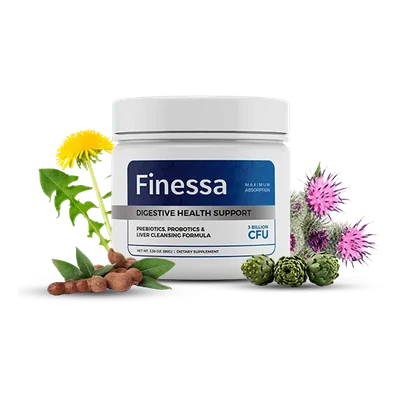
Finessa
- Form
- capsule
- Price
- $69 (1 bottle) · $39/bottle (6)
- Guarantee
- 180-day money-back (stated by seller)
- Sold via
- maxweb
- Label amounts
- Label web-sourced; roster varies 6-vs-8 by page and format described as both powder and capsules; no doses — critical for cascara sagrada (stimulant laxative the FDA removed from OTC monograph approval in 2002), aloe leaf (same class) and licorice (glycyrrhizin blood-pressure/potassium effects); 180-day guarantee very consistent incl. used-up orders; $179 fake anchor
✓ 180-day refund window stated by seller — long enough to run an honest self-trial
Check current price on the seller's site
Affiliate link. Prices and guarantee as shown on the seller's page on 3 September 2026; they may have changed. Not independently verified beyond that page.
Evidence & product fit
| Product Fit factor | Score (out of 5) | Why |
|---|---|---|
| Formula completeness | 1.5 | The laxative engine is never named as such — pages sell microbiome balance while the formula moves bowels chemically; roster drifts between six and eight ingredients, format between powder and capsules, and no doses appear for the three ingredients (cascara, aloe, licorice) where the milligrams are safety information. |
| Ease of use | 4.5 | The capsule format is generally straightforward, but clear serving directions were not available in the product facts we verified. |
| Guarantee & buying terms | 4.5 | 180 days, unusually consistent across the ecosystem, honored even on used-up orders — the offer's genuinely strong plank. |
| Price / value | 2.0 | $39–69/bottle when psyllium — the evidenced part — costs pennies a day as itself. |
| Category relevance | 3.5 | Parts of the named formula are aligned with gut and digestive support positioning. Category relevance measures fit to the intended use; it does not mean the finished product has been clinically proven effective. |
Might suit you if…
- Almost no one as marketed — the buyer who wants what this actually does (occasional laxative effect) is better served by knowing that's what they're buying, at pharmacy prices, for occasional use
Skip it if…
- Anyone planning daily long-term use — chronic stimulant-laxative exposure risks dependence and worsening baseline function, the opposite of the "gut restoration" promised
- Anyone with high blood pressure, low potassium, or on diuretics/digoxin — undosed licorice root is a documented pseudoaldosteronism trigger
- Anyone whose constipation is new, painful, alternating, or accompanied by blood or weight loss — that's a diagnosis list, not a scoop
The Evidence Rating reflects research on the finished product and/or named ingredients for the intended use. The Product Fit Score is a separate practical assessment of formula completeness, ease of use, guarantee/buying terms, price/value and category relevance. Neither score is a customer rating, and affiliate relationships do not determine either score. See the full scoring method.
What Finessa is
Finessa is a daily digestive formula — a morning powder on most pages, capsules on one — at $39–69/bottle with the queue's most consistent 180-day guarantee, and a named roster whose first two members define it: cascara sagrada and aloe vera leaf — stimulant laxatives — alongside psyllium, licorice, flaxseed, an undosed L. acidophilus, and (on some pages) dandelion and milk thistle. No amounts appear for anything, including the three ingredients where amounts are safety data.
Naming the engine
Every review in this queue asks what a formula's felt effects actually are. Here the answer is pharmacology older than the marketing: anthraquinone laxatives stimulate colonic contraction — the "smooth, effortless, regular" outcomes the testimonials describe — while the sales pages narrate microbiome balance and the gut-liver axis. The FDA pulled cascara and aloe from OTC laxative approval in 2002 for insufficient safety data; sold as supplements, they return without the doses, warnings, or short-term-use labeling that drug status enforced. Daily, indefinitely, undosed is precisely the exposure pattern gastroenterology's constipation guidance exists to prevent — while the one honestly evidenced member, psyllium, does its quiet work at pharmacy prices.
| The ledger | |
|---|---|
| Actual mechanism | Stimulant laxation, never named on the pages |
| Cascara/aloe regulatory history | Removed from OTC approval, 2002 |
| Licorice dose | Unstated — a real blood-pressure caution |
| Psyllium | The genuine article, undosed |
| 180-day guarantee | Excellent and consistent |
Verdict
2.4/5 — strong guarantee, honest fiber, hidden engine. The reader's evidence-based version costs almost nothing: psyllium daily (printed dose, cholesterol bonus), the constipation ladder when needed, and stimulant laxatives as medicine uses them — occasionally, knowingly, and never as a lifestyle.
Frequently asked questions
What happened with cascara and the FDA?
In 2002 the FDA removed cascara sagrada (and aloe) from the approved over-the-counter stimulant-laxative monograph, ruling the safety data insufficient for continued OTC drug approval. Both remain legal as supplements — a regulatory gap this product lives in: the same compound, minus the drug-grade dosing, labeling and warnings that OTC status required. A daily-wellness powder built on delisted laxative botanicals, with no doses printed, inverts every safeguard that decision was about.
Isn't "it works" the point? Users feel results.
Stimulant laxatives always "work" — they chemically trigger colonic contractions. That's a drug effect, not restored gut health, and it's the mechanism behind the flatter-belly testimonials. The concern is the daily framing: gastroenterology reserves stimulant laxatives for short-term use because chronic exposure can reduce baseline bowel function and create dependence on the very product marketed as fixing you. Our constipation page maps the actual first-line ladder — fluid, fiber (psyllium!), movement, osmotics — where daily use is safe.
What's genuinely good in the formula?
Psyllium husk — real randomized evidence for regularity and modest LDL-cholesterol reduction, safe daily, and the probable source of any legitimate long-term benefit here. It costs pennies as itself, with the dose printed. The 180-day guarantee is also authentically strong: consistent across pages, honored on finished orders. Good refund terms on a mislabeled mechanism is this product in one line.
Finessa — from $69 · 180-day seller refund window
Check current price on the seller's site Compare digestive and probiotic supplements
Affiliate links. Our evaluation is unaffected — the criterion scores above explain the verdict either way.
References
- NIDDK. Constipation (2018). https://www.niddk.nih.gov/health-information/digestive-diseases/constipation
- NCCIH. Probiotics: What You Need To Know (2019). https://www.nccih.nih.gov/health/probiotics-what-you-need-to-know
- U.S. Food and Drug Administration. Dietary Supplements (2024). https://www.fda.gov/food/dietary-supplements
Digestive supplements and probiotics do not replace evaluation for persistent abdominal pain, gastrointestinal bleeding, unexplained weight loss, repeated vomiting or significant changes in bowel habits. Effects vary by strain and ingredient, and some products may worsen bloating initially or be unsuitable for severely immunocompromised people.